 Bind
Bind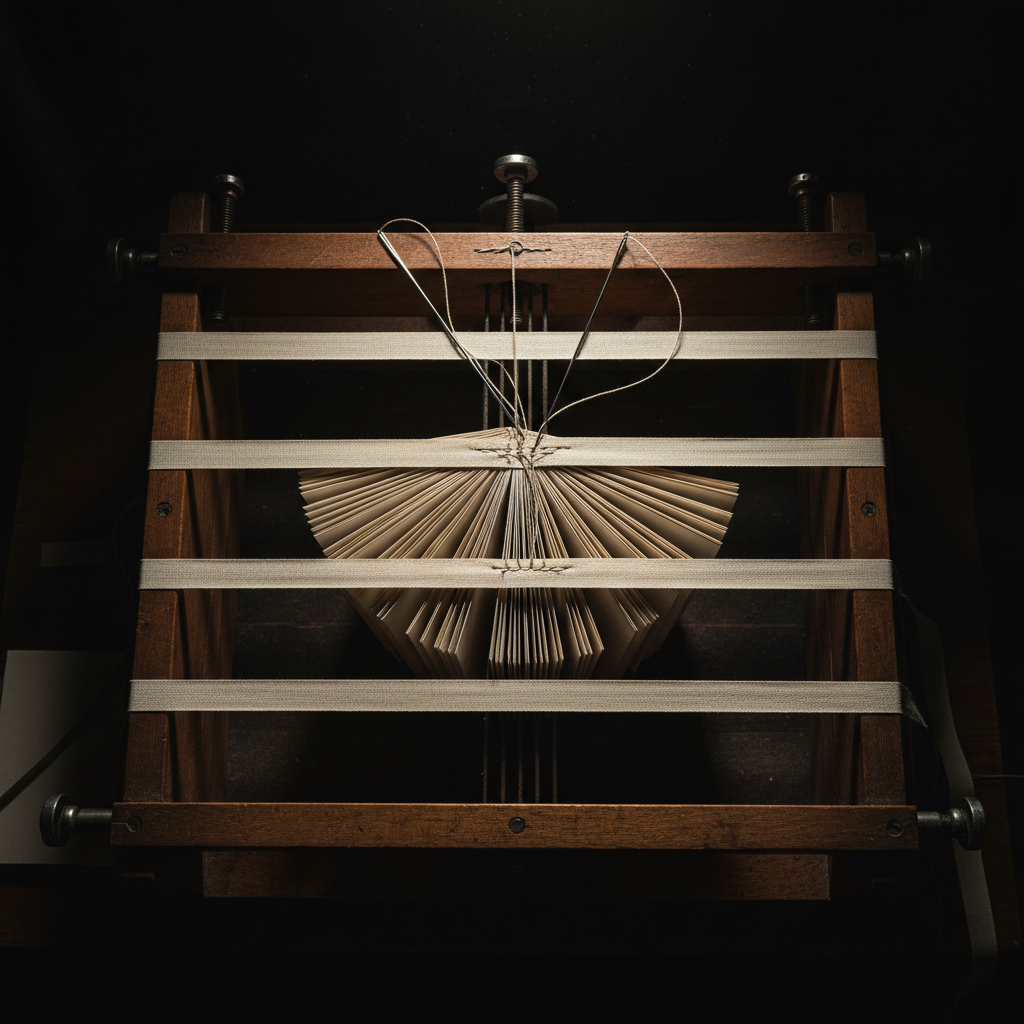
Every Book Has
a Spine Story.
Loose signatures, crumbling spines, and unbound galleys find their permanent form here — through linen thread, wheat paste, and techniques that have survived five centuries.
The 1920s Family Bible —
Water Damage, Recovered.
The Damage
Tide Marks and a Broken Spine
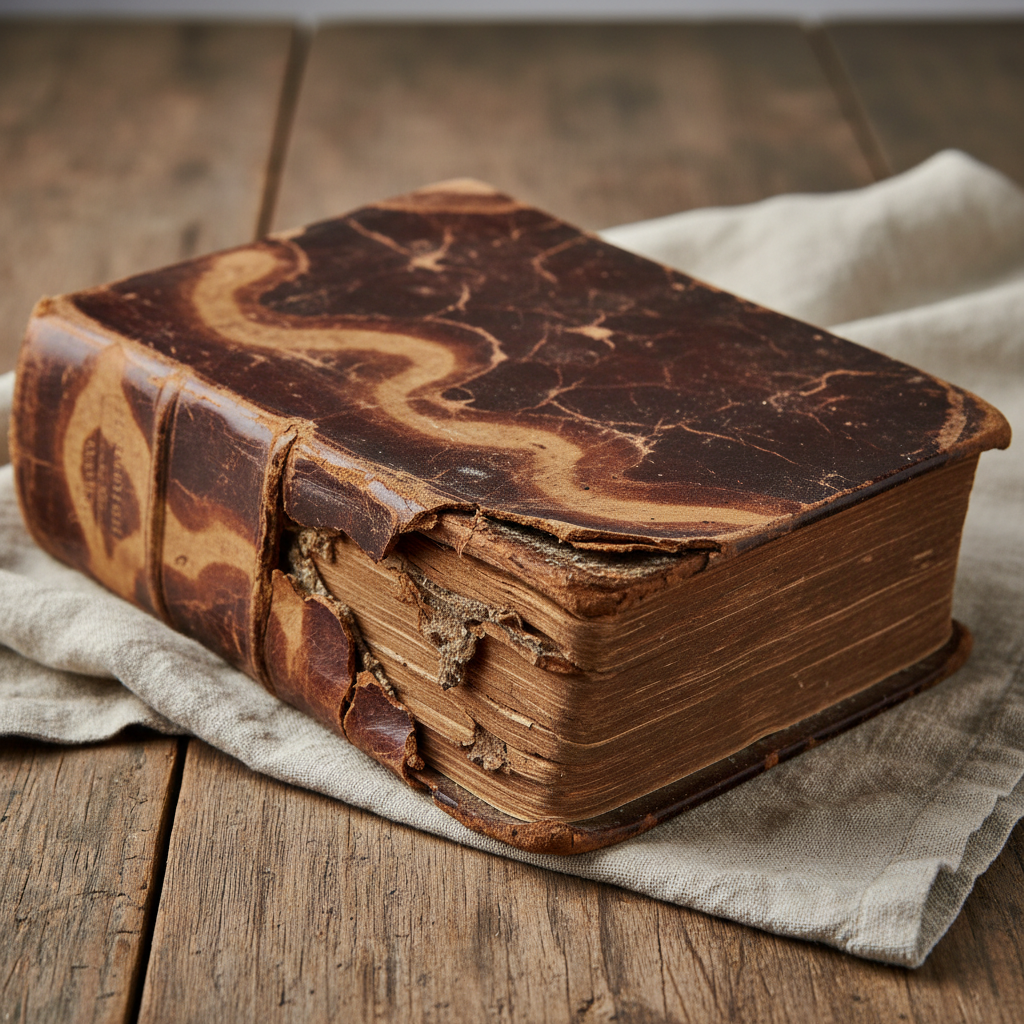
A client arrived with a family Bible that had spent three days in a flooded basement. The original full-leather binding — likely a German ecclesiastical edition, circa 1922 — had delaminated at both hinges. Tide marks stained the text block to page 340. The spine leather had contracted, pulling the boards into a pronounced warp.
First assessment: the sewing was intact throughout — the original binder had used a tight Kettle StitchKettle StitchA linking stitch at the head and tail of each signature that locks rows of sewing together and prevents the text block from separating. pattern that held even under submersion. The structure was worth saving.
The Technique
Disbinding, Washing, Resewing
Each of the Bible's 48 signatures was carefully separated and interleaved with blotting paper for controlled drying over six days. Once dimensionally stable, tide marks were reduced with a 1% methyl cellulose solution applied with a Japanese brush.
Resewing followed the original pattern: all-along sewing on five Linen TapesLinen TapesFlat strips of linen fabric sewn across the spine at intervals, providing anchor points for the boards and distributing opening stress along the entire spine.with a French Link StitchFrench Link StitchA decorative and structurally strong linking stitch between signatures that creates a visible chain pattern — visible in exposed-spine bindings. linking each signature. New spine leather — a matching goatskin toned with iron gall — was pared to 0.3mm at the turn-ins.
Diagram — Kettle Stitch Sequence
Outcome
Returned to the family after 8 weeks. Expected lifespan with proper storage: another century.
Materials Used
- Matched goatskin spine leather
- 18/3 linen thread
- Five cotton linen tapes
- Wheat starch paste
Duration
8 weeks
Including drying and toning
PhD Dissertation —
Quarter Leather, Permanent Record.
Diagram — Quarter Leather Spine with Raised Cords
The Commission
Four Copies, One Correct Answer
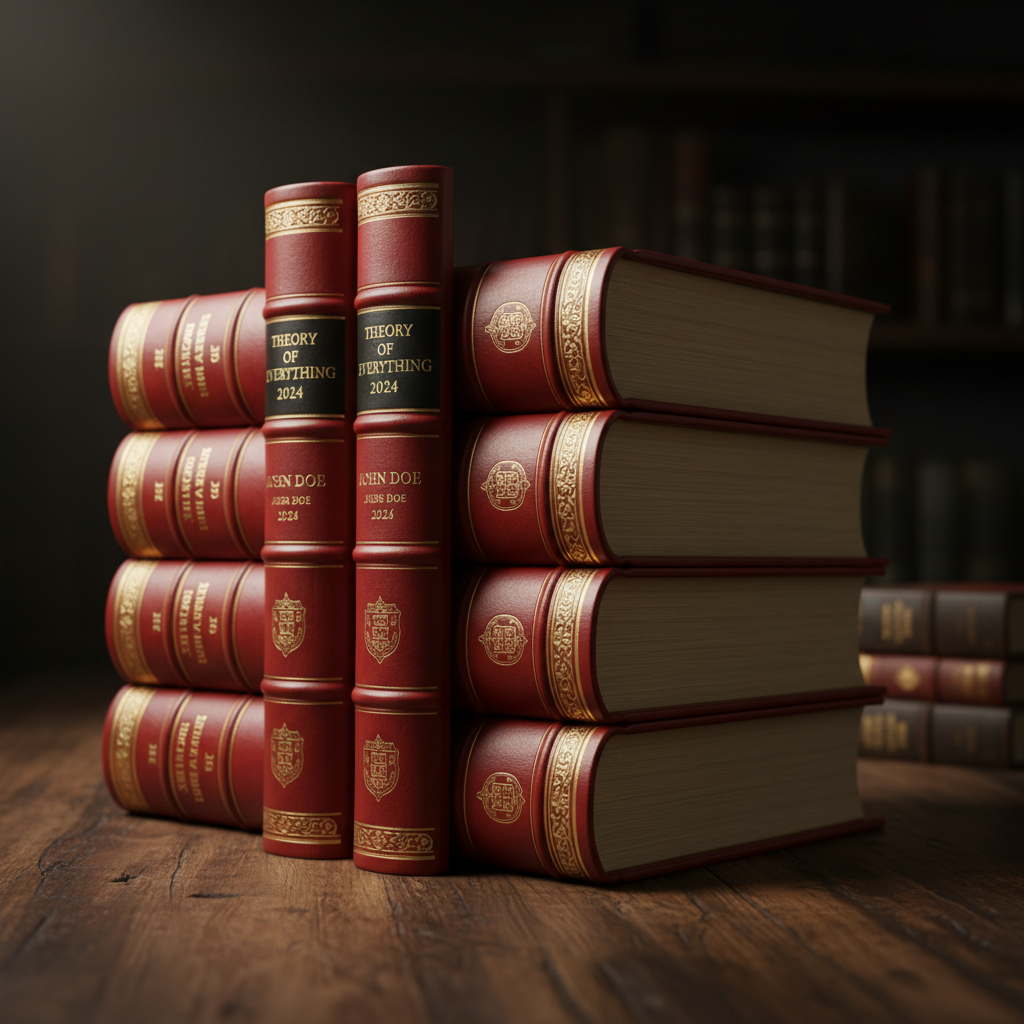
A doctoral candidate in architectural history at Columbia needed four archival-quality copies of a 340-page dissertation with 80 full-bleed plates. University requirements specified a minimum board thickness of 3mm and a title stamped in genuine gold foil. The client wanted something that would sit in the Columbia library stacks for fifty years without embarrassment.
The solution: Smyth SewingSmyth SewingMachine or hand sewing that passes thread through the fold of each signature and links them in sequence — the strongest and most opening-friendly binding structure for thick books. on six Raised CordsRaised CordsLengths of hemp or leather cord laced through the boards and visible on the spine, creating the ridged bands seen on traditional leather bindings — both structural and decorative. with quarter tan calfskin covering the spine and first quarter of each board. Text paper: 80gsm acid-free cream wove.
The Craft Detail
Gold Tooling by Hand
Each spine was tooled at 85°C using a heated fillet and 23-carat gold leaf — not foil blocking, which lifts over time, but genuine hand tooling through a Mylar guide. The title, author, and year were set in 14pt Caslon and impressed twice: once blind to consolidate the leather, once with gold.
Boards were covered in a BookclothBookclothA cotton or linen fabric with a starch or acrylic fill that prevents adhesive strike-through, used to cover boards in edition and library bindings. in charcoal Japanese cotton, with the leather overlap mitred at each corner to a precise 1mm border.
Poetry Chapbook Edition —
Exposed Long-Stitch, 75 Copies.
The Brief
The Binding as Part of the Poem
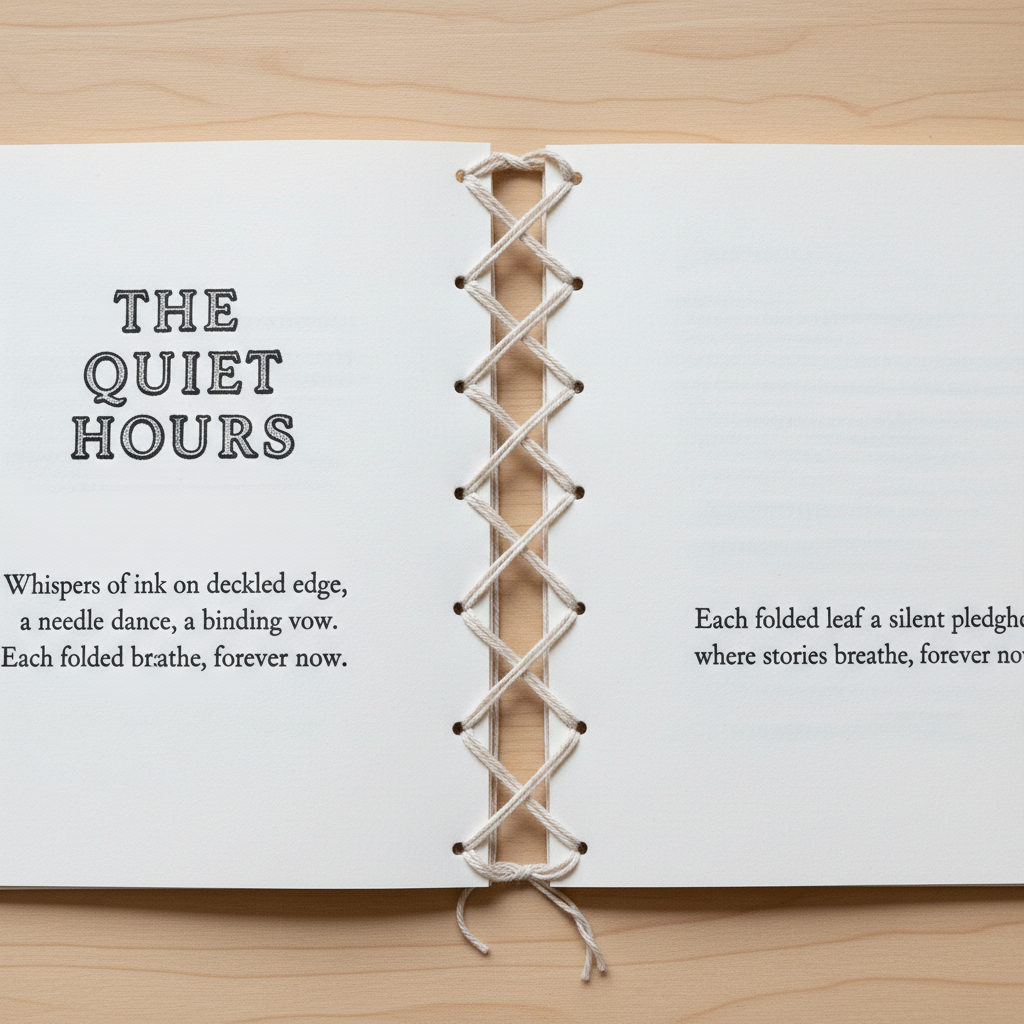
A letterpress printer in Brooklyn commissioned 75 copies of a debut poetry collection printed on dampened Rives BFK — a 280gsm cotton rag that refuses to fold cleanly without careful scoring. The poet had a specific requirement: the sewing must be visible from outside the book. The binding should announce itself as a made object.
The structure chosen: Exposed Long-StitchExposed Long-StitchA non-adhesive binding where thread travels the full length of each signature and wraps around tapes or cords on the outside of the spine — the sewing pattern is fully visible and structural. on linen tapes dyed with indigo, using 35/3 waxed linen thread in a pattern the printer specified from a 1960s Norwegian craft manual.
Diagram — Exposed Long-Stitch on Tapes
The Edition Challenge
75 Identical Copies, Each Sewn by Hand
Edition work of this kind requires a jig — a drilling template ensuring every piercing station aligns across all 75 copies. The Rives BFK required a 0.7mm needle (a size up from standard) to prevent tearing at the piercing points. Each copy took 42 minutes to sew.
Covers were a Clamshell BoxClamshell BoxA protective enclosure for books in which two trays are hinged together — one tray slides over the other. The resistance of the opening is calibrated to the weight of the book it holds. of handmade Japanese kozo paper over boards, with a letterpress- printed label. The finished object opens flat at every spread — a property essential to poetry, where the gutter cannot interrupt a line break.
The Illustrated
Binding Guide.
A 28-page illustrated PDF covering every binding structure in this workshop's repertoire — from pamphlet stitch to full leather — with diagrams, material specifications, and a checklist for preparing your pages before they arrive here.
What's inside
- All binding structures with cross-section diagrams
- Material selection guide: paper, board, cloth, leather
- Preparing pages: margins, bleed, grain direction
- Glossary of 40 binding terms with illustrations
Download free — no account required.
Your first name and email. Nothing else.
No spam. Unsubscribe any time. The guide is genuinely free — no upsell.
Ready to commission work instead?
Describe Your Project →